A Mindful Practice of Presence
The wind was particularly fierce this morning on my walk, the kind that makes you lean into it just to stay upright. And as I pushed against it, I thought about resistance – not the wind’s, but our own. How the very things we push against most fiercely often hold the keys to our next level of healing.
Recently, I’ve been sitting with this idea that our resistance points and triggers aren’t obstacles to overcome but rather windows – perfectly placed openings that invite us to peek into parts of ourselves we haven’t yet befriended. When we’re truly awake to our lives, these moments of resistance become breadcrumbs on the trail of our own becoming.
I was captivated this week by an interview with Dr. Ellen Langer, the Harvard psychologist who’s spent over 50 years researching mindfulness. And here’s what struck me: she reminds us that while we immediately equate mindfulness with meditation (guilty as charged – I teach yoga nidra, after all!), It’s actually something far more expansive and immediate.
Dr. Langer suggests that all our disasters, our bone-deep regrets, our moments of profound sadness – they happen when we’re not mindful. When we’re not actually here.
Friends, this landed in my body like truth.
As someone who’s spent decades in the landscape of self-examination, studying presence and awareness, I have to tell you something vulnerable: my biggest regrets, the moments that still sometimes visit me at 3 am, all happened when I was lost in what I call the “black holes” of my life.
You know these places. Where you’re moving so fast that life becomes a blur. Where you’re so caught up in the story of what should be happening that you miss what actually is. Where you use every excuse – busyness, obligations, other people’s needs – to avoid being present with the one moment that’s actually real: this one.
I think about that day in the grocery store parking lot years ago, when my body finally said “enough” after the summit burnout. I hadn’t been mindful. I’d been productive, successful, impactful – but not mindful. Not present to the whispers that had been trying to get my attention for months.
What if we approached our lives like curious researchers, with ourselves as the subject of gentle study? Not with judgment or the need to fix, but with genuine interest: “Oh, look at that – I’m resisting again. What might this be trying to show me?”
Your resistance to rest might be showing you old stories about worthiness. Your trigger around certain conversations might be illuminating unhealed boundaries. That flash of irritation when someone moves too slowly might be revealing your relationship with control.
Each point of resistance is data. Each trigger is information. Not about what’s wrong with you, but about where you’re ready to grow.
After my recent bicycle accident (yes, the universe has its ways of getting our attention), I’ve been even more aware of how presence changes everything. In that moment of impact, time expanded. There was no past, no future – just the extraordinary clarity of now. Even in crisis, perhaps especially in crisis, mindfulness was the doorway to grace.
But we don’t need to wait for crisis to practice presence. We can start with the small resistances:
- The pause before responding to that triggering text
- The breath when we feel our shoulders creeping toward our ears
- The moment of recognition when we’re spinning stories instead of staying with what is
Here’s what I know: tracking your resistance isn’t about self-improvement. It’s about self-compassion. It’s about becoming so intimately familiar with your patterns that you can meet them with kindness instead of criticism.
When we view our lives through this lens of curious observation, everything becomes a teacher. The resistance transforms from enemy to guide. The triggers shift from problems to pathways.
And perhaps most importantly, we stop abandoning ourselves in those black holes of unconsciousness. We stay close (yes, that’s intentional) to our actual lived experience, even when – especially when – it’s uncomfortable.
This week, I invite you to try this: Notice one point of resistance. Just one. Don’t try to fix it or push through it. Simply observe it with the tenderness you’d offer a dear friend. Ask it: “What are you here to teach me?”
Because darling, your resistance isn’t your failure. It’s your wisdom, dressed in work clothes, ready to help you build the next version of your beautiful, awakening life.
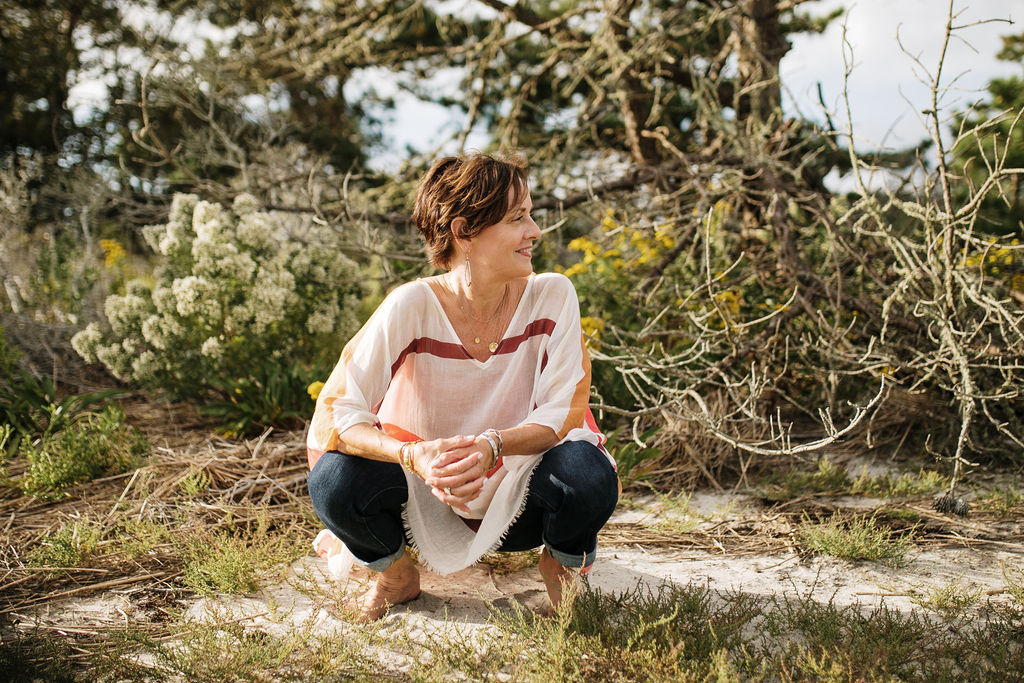
From my corner by the sea, where the wind teaches me daily about the grace of both resistance and surrender,
Sarah